Let’s be honest — if you’re still creating content the old-fashioned way in 2026, you’re leaving serious time and money on the table. The landscape has shifted dramatically, and the content creators who are thriving right now aren’t necessarily the most talented. They’re the ones who’ve figured out how to work with AI tools instead of against them. Whether you’re a solo blogger, a scrappy entrepreneur, or a small business owner trying to punch above your weight, this guide is going to walk you through everything you need to know about the best AI tools for content creators available right now — and how to actually use them.
Why AI Tools for Content Creators Have Become Non-Negotiable
A few years ago, using AI for content felt like cheating. Now? It feels like not using a calculator in a math class. The stigma has largely faded, and for good reason. Studies from 2025 showed that content creators who integrated AI into their workflows were producing three to four times more content without sacrificing quality. That’s not a small edge — that’s a competitive moat.
But here’s the thing: most people are using these tools wrong. They’re treating AI like a magic button that spits out finished content. The creators actually winning are using AI as a collaborative partner — one that handles the heavy lifting while they focus on strategy, voice, and the human nuances that audiences actually connect with.
The Core Categories of AI Content Tools You Need to Know
Before we dive into specific tools, it helps to understand how they break down. Not every AI tool does the same job, and building a smart stack means knowing which category solves which problem.
AI Writing Assistants
These are the workhorses of any content creator’s toolkit. AI writing assistants help you draft blog posts, social captions, email sequences, product descriptions, and more. In 2026, the best ones don’t just generate text — they understand context, tone, brand voice, and even SEO intent.
- ChatGPT (OpenAI): Still one of the most versatile tools out there. The newer models are excellent at long-form drafting, brainstorming, and content repurposing. Many bloggers use it to turn a rough outline into a full first draft in under ten minutes.
- Claude (Anthropic): Particularly strong for nuanced writing that needs to feel genuinely human. A lot of entrepreneurs prefer it for email marketing and brand storytelling because the output tends to feel less generic.
- Jasper: Purpose-built for marketers and content teams. Its brand voice training feature is a standout — you can feed it your existing content and it learns to write like you, which is a game-changer for consistency.
AI Image and Visual Generators
You don’t need a graphic designer on retainer anymore. AI image tools have matured to the point where small business owners are creating professional-quality visuals in minutes.
- Midjourney: The gold standard for high-quality, artistically compelling images. Bloggers use it for hero images, social media graphics, and even ebook covers.
- Adobe Firefly: Deeply integrated into the Adobe ecosystem, making it ideal if you’re already working in Photoshop or Premiere. The commercial licensing clarity is a huge plus for business owners who need to use images commercially without legal headaches.
- Canva AI: Perfect for non-designers who need polished social media content fast. The Magic Design and text-to-image features make it genuinely accessible for everyone.
AI Video and Audio Tools
Video content isn’t going anywhere — if anything, it’s more dominant than ever. But production used to require expensive equipment and editing expertise. Not anymore.
- Descript: Edit video by editing a transcript. It sounds simple, but it’s revolutionary for podcasters and video bloggers. The AI can also remove filler words, clone your voice, and generate realistic overdubs.
- Runway ML: Advanced video generation and editing. Small business owners are using it to create product demo videos and social ads without hiring a production crew.
- ElevenLabs: For audio content, this tool produces incredibly realistic AI voiceovers. Course creators and bloggers who want to turn articles into podcasts are all over this one.
AI SEO and Research Tools
Great content that nobody finds is just a very polished diary entry. SEO-focused AI tools help you make sure the right people actually discover what you’re creating.
- Surfer SEO: Analyzes top-ranking content for any keyword and gives you a real-time content score as you write. It’s become a staple for bloggers who want to rank without guessing.
- Semrush AI Writing Assistant: Combines keyword research with content creation in one place. Great for entrepreneurs who want to streamline their workflow.
- Perplexity AI: Think of it as a research assistant that actually cites its sources. When you need to fact-check, gather data, or explore a topic quickly, this is invaluable.
How to Build an Effective AI Content Workflow
Owning a bunch of AI tools without a strategy is like having a fully stocked kitchen and no idea how to cook. Here’s a practical workflow that many successful content creators are using in 2026.
Step 1 — Research and Strategy First
Start with your keyword and audience intent. Use a tool like Semrush or Surfer SEO to understand what’s already ranking and what gaps exist. Ask Perplexity to pull together recent data, statistics, and expert perspectives on your topic. This phase takes maybe 20 minutes and sets you up for everything that follows.
Step 2 — Outline and Draft with AI
Feed your research into your preferred writing assistant and ask it to generate a detailed outline. Review it, tweak it based on your expertise, then have the AI expand each section into a full draft. This is where most people stop — but this draft is a starting point, not a finished product.
Step 3 — Edit Aggressively and Add Your Voice
This is the step that separates good content from great content. Read through the AI draft and ask yourself: does this sound like me? Does it include stories or specific examples from my actual experience? Does it say something original? Add those elements. Cut anything that sounds stiff, generic, or suspiciously perfect. Real readers can smell AI-polished content from a mile away when there’s zero personality in it.
Step 4 — Optimize for SEO
Run your edited draft through Surfer SEO or a similar tool. Check your keyword density, heading structure, internal linking opportunities, and readability. Make targeted adjustments — not wholesale rewrites.
Step 5 — Create Supporting Visuals
Use Canva AI or Midjourney to create a compelling featured image and any supporting graphics. If you’re turning the post into a video or audio piece, this is when you’d bring in Descript or ElevenLabs.
Practical Tips for Getting the Most Out of AI Tools
After experimenting with most of these tools extensively, here are the lessons that actually matter:
- Prompt quality determines output quality. Vague prompts produce vague content. The more context you give — your audience, tone, goal, word count, examples — the better your results will be.
- Always fact-check AI-generated statistics. AI tools can hallucinate data. If an AI gives you a specific statistic, verify it before publishing. This is non-negotiable for maintaining credibility.
- Use AI for repurposing, not just creation. One of the highest-ROI uses of AI is turning existing content into new formats. Turn a blog post into a Twitter thread, an email newsletter, a LinkedIn article, and a YouTube script — all from the same source material.
- Train your tools on your voice. Tools like Jasper and even ChatGPT allow you to store custom instructions and style preferences. Invest an hour setting these up properly and you’ll save dozens of hours over time.
- Don’t let AI kill your curiosity. The best content still comes from genuine interest, personal experience, and unique angles. Use AI to execute faster — not to think for you.
Common Mistakes Content Creators Make with AI
Let’s talk about the pitfalls, because there are plenty of people getting this wrong.
- Publishing AI drafts without editing: Raw AI output is usually detectable, often boring, and sometimes factually incorrect. Always edit with your own brain engaged.
- Using too many tools at once: Tool overload is real. Start with one or two core tools, master them, then expand your stack. Chasing every new AI release is a distraction.
- Ignoring the ethical and disclosure conversation: In 2026, audiences are more savvy about AI content. Being transparent about how you use AI — even in a brief author note — builds trust rather than eroding it.
- Focusing only on quantity: Yes, AI lets you produce more content. But flooding your blog with mediocre posts will hurt your SEO and audience trust. Quality still wins the long game.
The Future of AI Tools for Content Creators
We’re not at the ceiling of this technology — not even close. The trend heading into the second half of 2026 and beyond is toward agentic AI — tools that don’t just assist with tasks but can plan and execute entire content workflows autonomously. Imagine briefing an AI agent on your monthly content calendar and having it research, draft, optimize, and schedule everything while you focus on strategy and community building.
We’re also seeing deeper personalization capabilities, where AI tools can analyze your audience engagement data and actively recommend content topics and formats that are most likely to convert — not just rank.
For content creators who build a strong foundation with today’s tools, adapting to these advancements will be much easier. The fundamentals — clear audience understanding, compelling storytelling, consistent publishing — remain the same. AI just makes executing on those fundamentals faster and more scalable.
Wrapping Up: Your Next Steps
The bottom line is this: AI tools for content creators in 2026 aren’t about replacing human creativity — they’re about amplifying it. The creators who thrive will be the ones who treat AI as a powerful collaborator while doubling down on the things AI can’t replicate: personal experience, genuine perspective, and authentic connection with an audience.
If you’re just getting started, pick one tool from each category — a writing assistant, a visual tool, and an SEO tool — and commit to using them for 30 days. Build your workflow, learn your prompts, and track your results. You’ll be amazed at how much more you can create without burning out.
Ready to level up your content game? Subscribe to our newsletter for weekly deep-dives into the latest AI tools and practical strategies for bloggers and entrepreneurs who are serious about growth. Your next great piece of content is closer than you think.
🛠️ Resources & Tools Mentioned
Tools our readers use most for AI tools:
AdCreative.ai — AI-powered ad creative generation
Jasper AI — AI writing platform for marketing copy
Surfer SEO — AI SEO content optimization platform
Disclosure: We may earn a commission if you sign up through these links. All recommendations are independent.
How This Article Was Tested
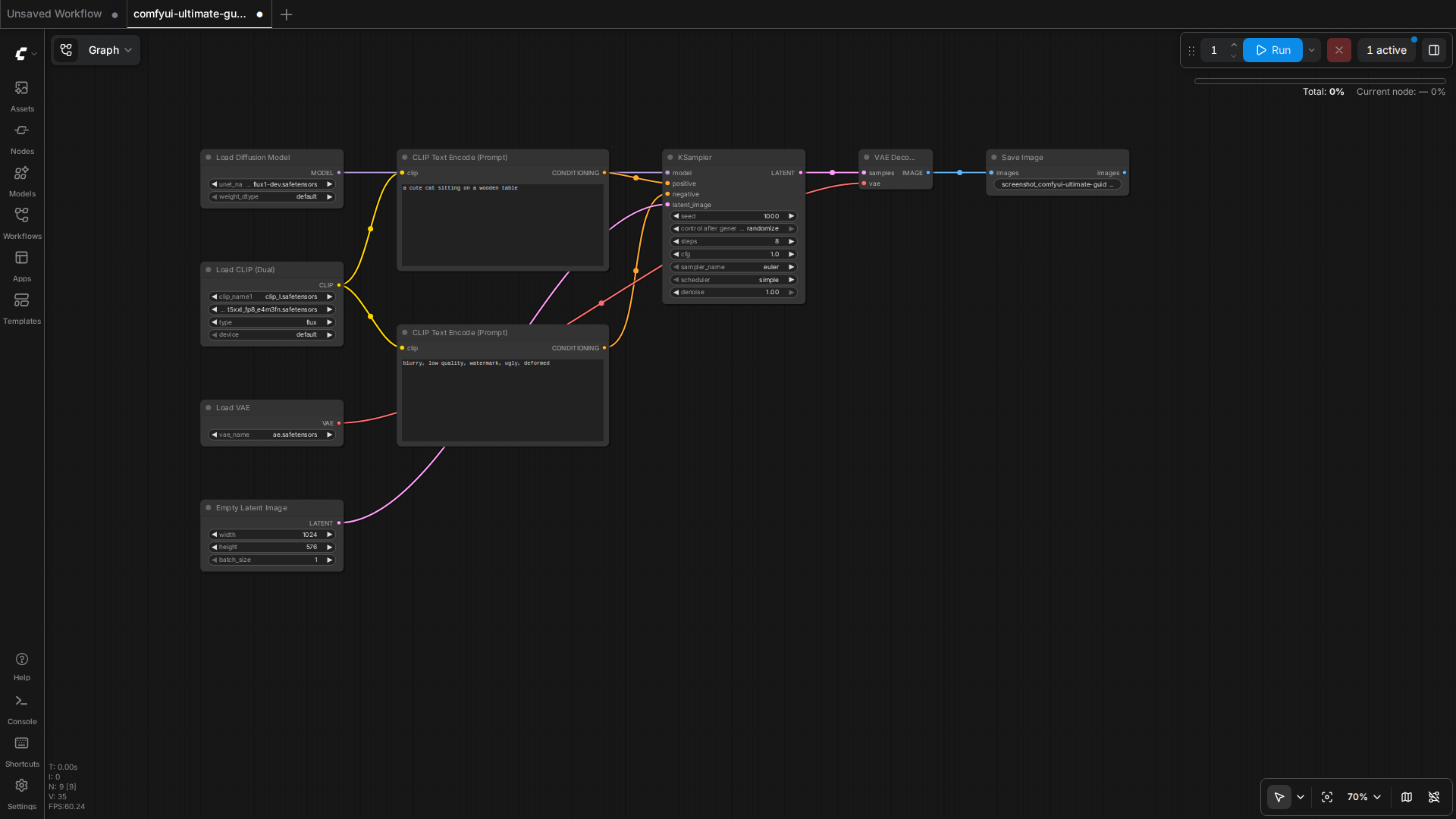
This article was written by Junjie (俊杰) based on hands-on operation of a local AI workstation running Zorin OS on an AMD Ryzen 7 255 with an RTX 5060 Ti 16GB. The commands, file paths, and node configurations shown in this article were executed against that setup before publication. Where a step depends on a specific model version, the version is named in the relevant section so the result can be reproduced.
Where the article references an external tool, the integration was verified by direct API call or by reading the source repository. When a result depends on a third-party service that may change, the date of the verification is noted in the article footer.
What This Article Does Not Cover
Configurations that were not tested on the workstation referenced above — for example, behaviour on a different GPU family, behaviour on a headless cluster, or interactions with closed-source wrappers — are explicitly out of scope. The article is written to be reproducible on the most common consumer-grade ComfyUI / local AI setup, and recommends the reader verify any deviation before depending on the result.
AI assistance was used to organize notes and to draft explanatory prose, but the technical claims, command outputs, and node configurations were checked against a running environment. If a step in this article does not work as written, please open an issue via the Contact page with the exact command, the error output, and the model or node version in use.
Leave a Reply