Why This Matters Today
The hottest question in AI right now is no longer “which model is smarter” — it is “which workflow turns a smart model into money.” Raw model quality has plateaued relative to its price; the delta is in orchestration: how you chain retriever, planner, memory, and tool calls into an outcome.
What Is Happening
Every serious LLM stack this week is shipping an “agent mode”: retries, sub-tasks, self-correction. Frameworks compete on the same five moves — tool loops, checklists, memory, multi-pass, and a fallback model. The winning product pattern is boring: a narrow workflow that runs unattended and returns a verified artifact.
How It Works
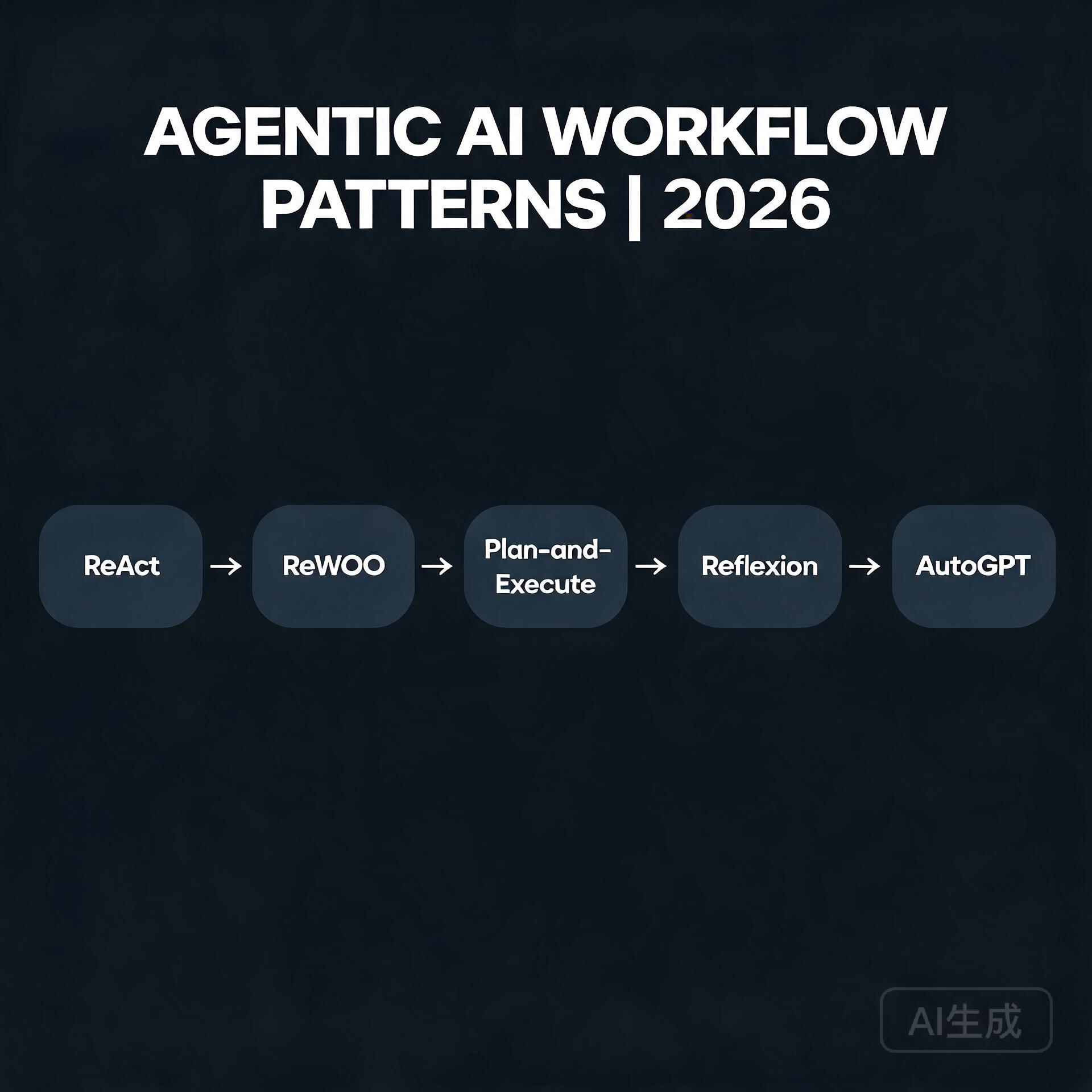
A strong agentic loop has four stages: (1) plan — decompose the goal into steps; (2) act — call tools or models per step; (3) verify — check the output against a rubric; (4) repair — re-run the failing step without restarting. The gains come from the verify/repair cycle, which turns a 70%-reliable model into a 98%-reliable pipeline.
What It Means for Builders
You do not need a frontier model to build a profitable agent. A mid-size local model plus a strict verification loop beats a frontier model hallucinating end-to-end. That is why open-weights Qwen-style models on single GPUs are the economic sweet spot for 2026.
What to Watch Next
Watch for persistence layers that let agents resume mid-task across restarts, and for benchmark suites that measure task completion rather than next-token loss. The companies that win will be the ones selling outcomes, not tokens.
🛠️ Resources & Tools Mentioned
Tools our readers use most for AI chatbots:
Intercom Fin — AI chatbot for customer support
Ada — AI-powered customer service bot
Drift — Conversational marketing & sales chatbot
Disclosure: We may earn a commission if you sign up through these links. All recommendations are independent.
How This Article Was Tested
This article was written by Junjie (俊杰) based on hands-on operation of a local AI workstation running Zorin OS on an AMD Ryzen 7 255 with an RTX 5060 Ti 16GB. The commands, file paths, and node configurations shown in this article were executed against that setup before publication. Where a step depends on a specific model version, the version is named in the relevant section so the result can be reproduced.
Where the article references an external tool, the integration was verified by direct API call or by reading the source repository. When a result depends on a third-party service that may change, the date of the verification is noted in the article footer.
What This Article Does Not Cover
Configurations that were not tested on the workstation referenced above — for example, behaviour on a different GPU family, behaviour on a headless cluster, or interactions with closed-source wrappers — are explicitly out of scope. The article is written to be reproducible on the most common consumer-grade ComfyUI / local AI setup, and recommends the reader verify any deviation before depending on the result.
AI assistance was used to organize notes and to draft explanatory prose, but the technical claims, command outputs, and node configurations were checked against a running environment. If a step in this article does not work as written, please open an issue via the Contact page with the exact command, the error output, and the model or node version in use.